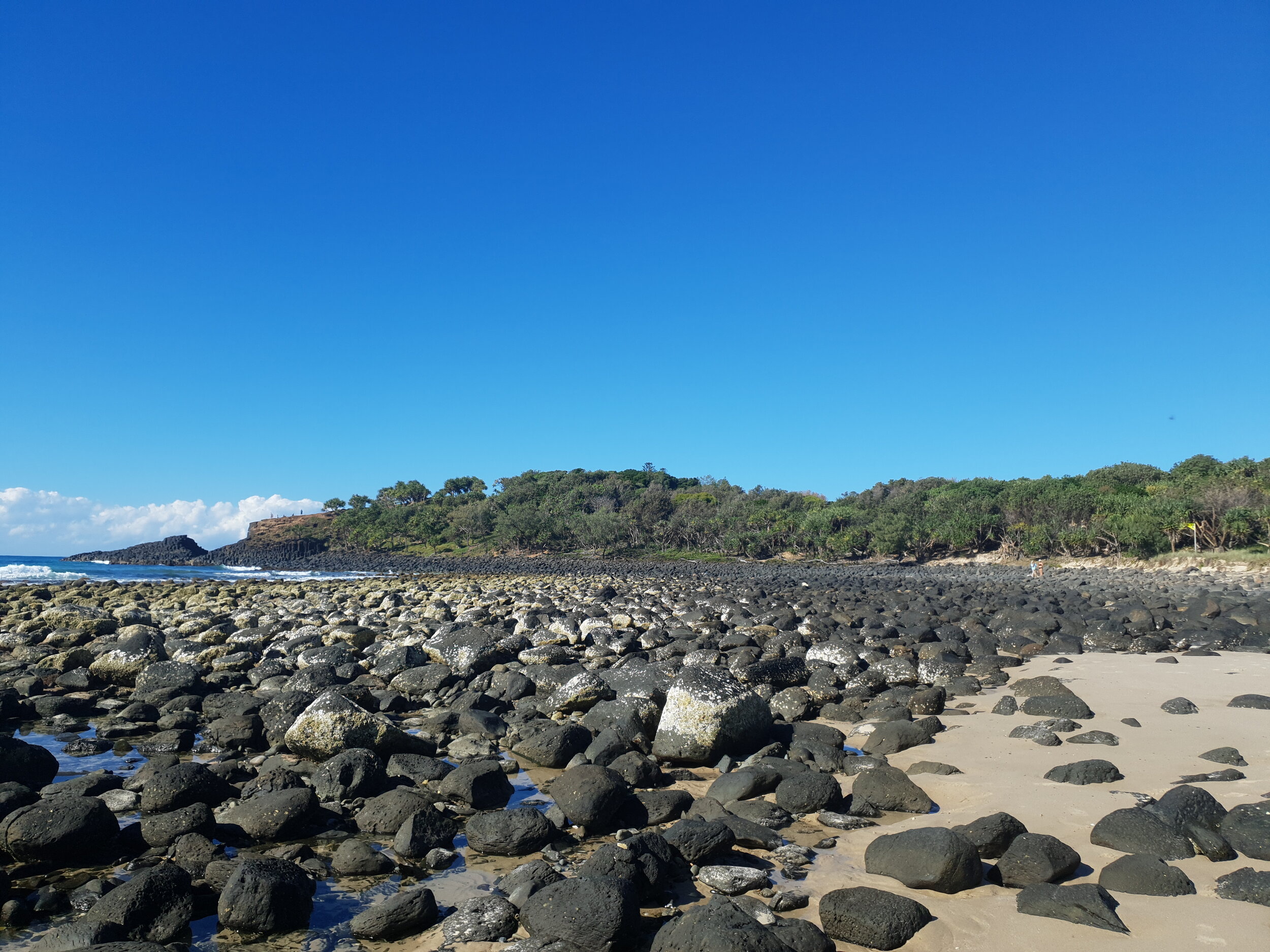
Fingal Beach, New South Wales - Australia
Research Topics
-
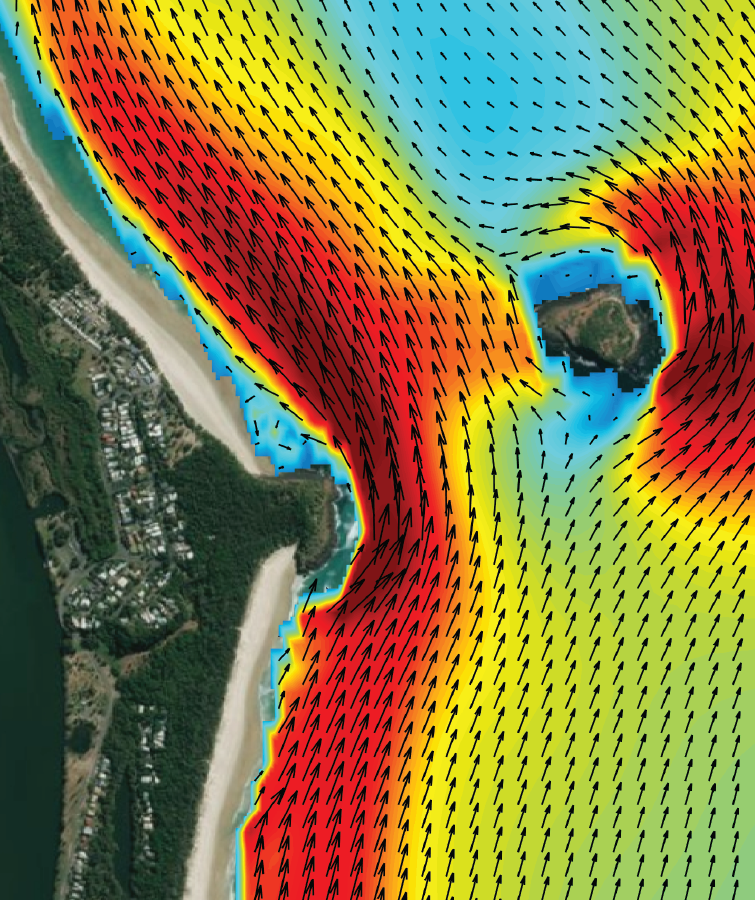
Coastal Analysis and Modelling
My research in coastal processes focuses on understanding coastal geomorphological change and the mechanisms driving it through the integration of GIS analyses, field observations, and process-based modelling. This includes investigating key natural dynamics such as headland bypassing, storm-driven sediment transport, and long-term shoreline evolution.
-
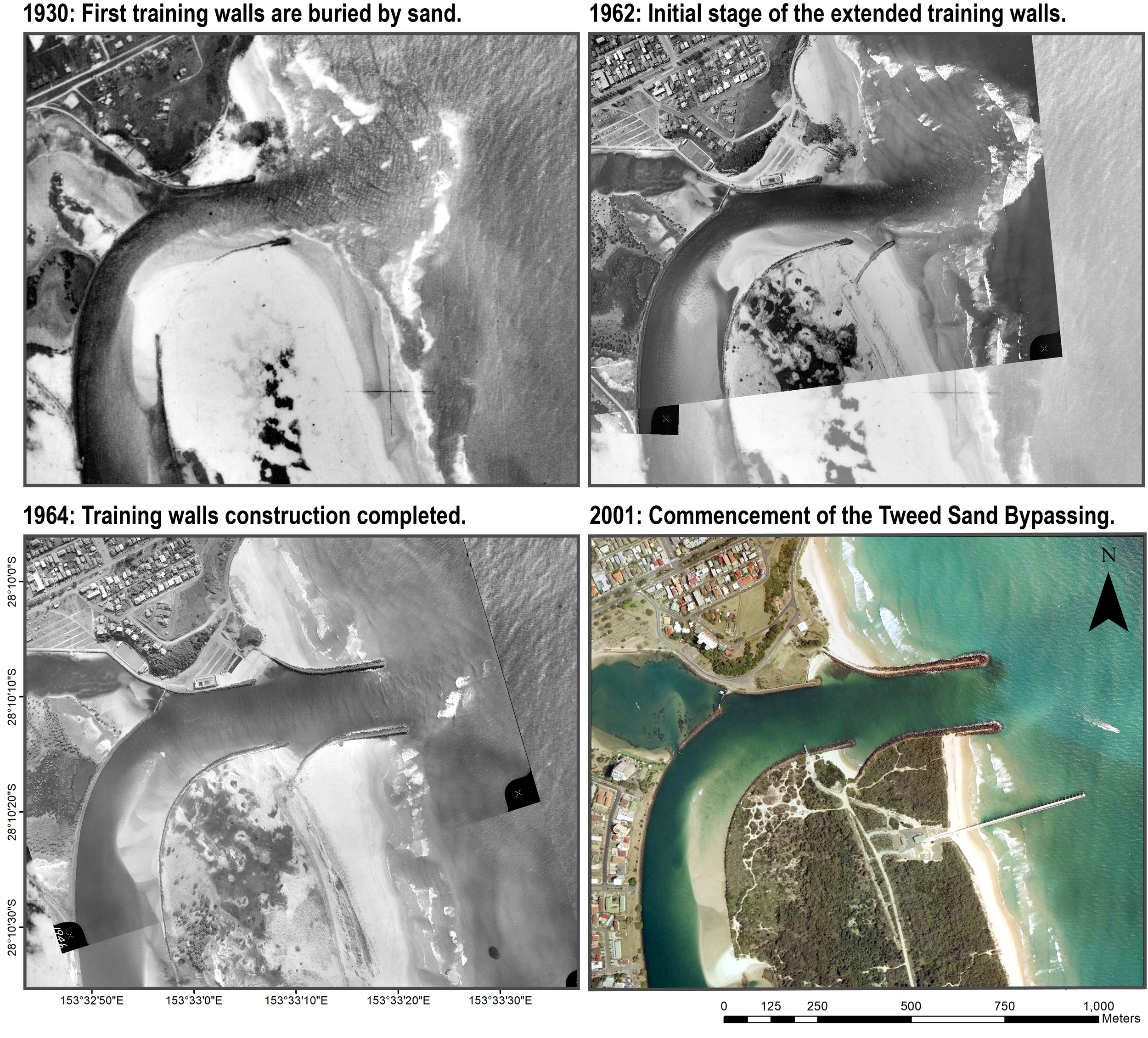
Human-Driven Coastal Changes
My research in human-driven coastal changes investigates geomorphological responses to engineering interventions such as training walls, sediment bypassing systems, land reclamation, and inlet relocation. A key focus is understanding the magnitude, spatial extent, and timescales of upper beach and nearshore morphological change associated with these interventions.
-
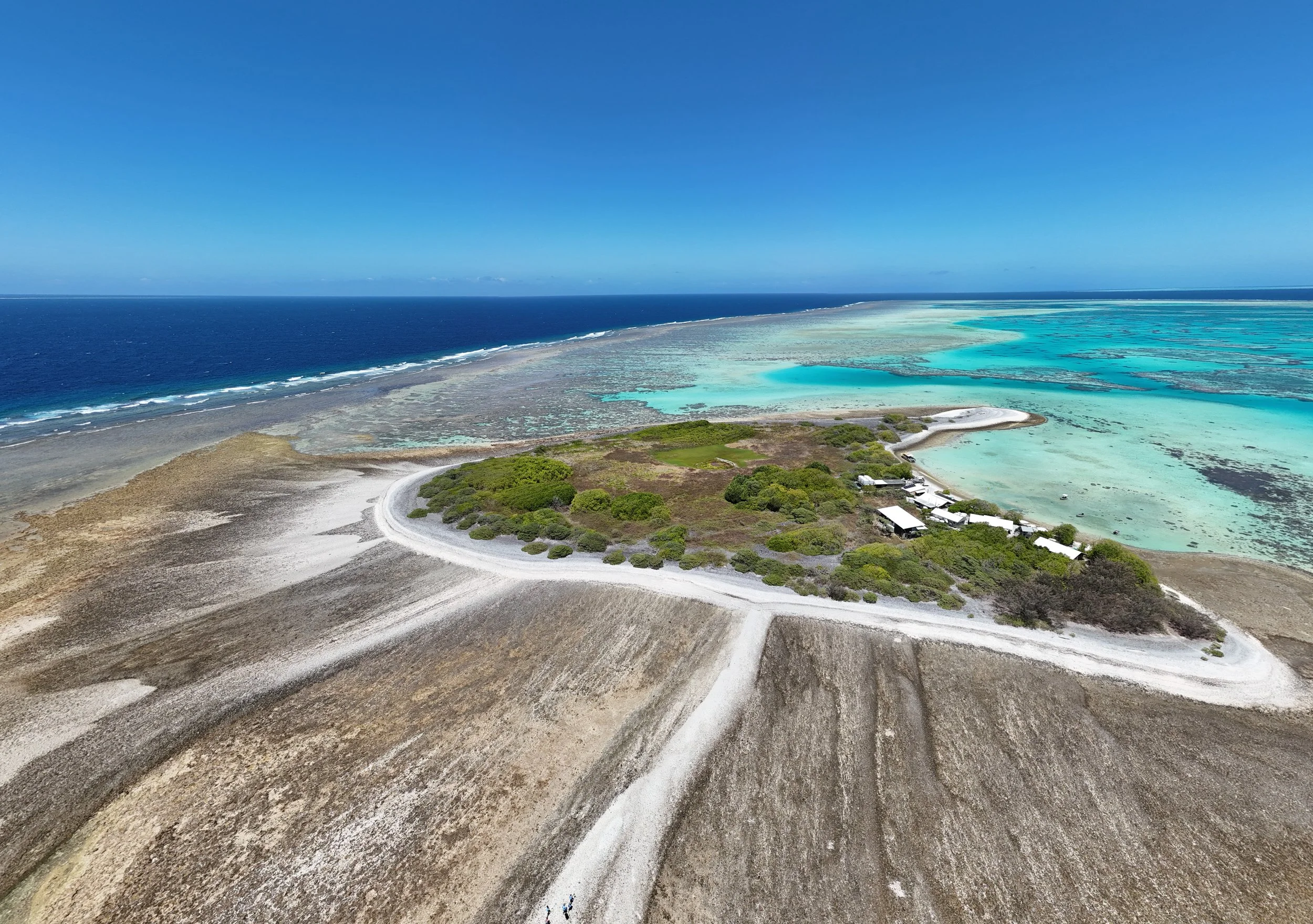
Coral Reef Eco-Morphodynamics
My research in coral reef eco-morphodynamics investigates how interactions between coral reef structure, hydrodynamic processes, and sediment production influence the resilience of coral reef coastlines and islands. I focus on understanding how environmental change affects coral health and how these changes alter coastal protection under future climate scenarios.
-
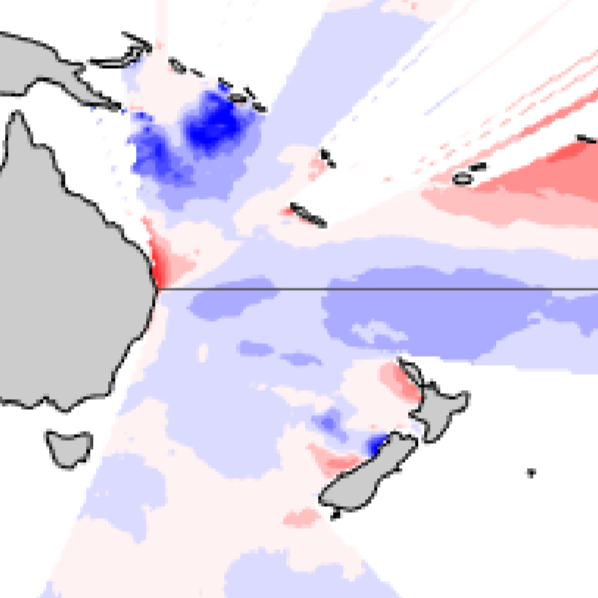
Wave Climate and Large-Scale Atmospheric Drivers Analysis
My research in wave climate focuses on understanding the spatial and temporal variability of ocean wave conditions and the large-scale climate processes driving them through the integration of long-term datasets, geospatial analyses, and numerical modelling. This includes investigating the influence of tropical cyclones, atmospheric circulation patterns, and climate variability on extreme wave events, coastal hazards, and long-term changes in wave climate across reef and coastal systems.
-
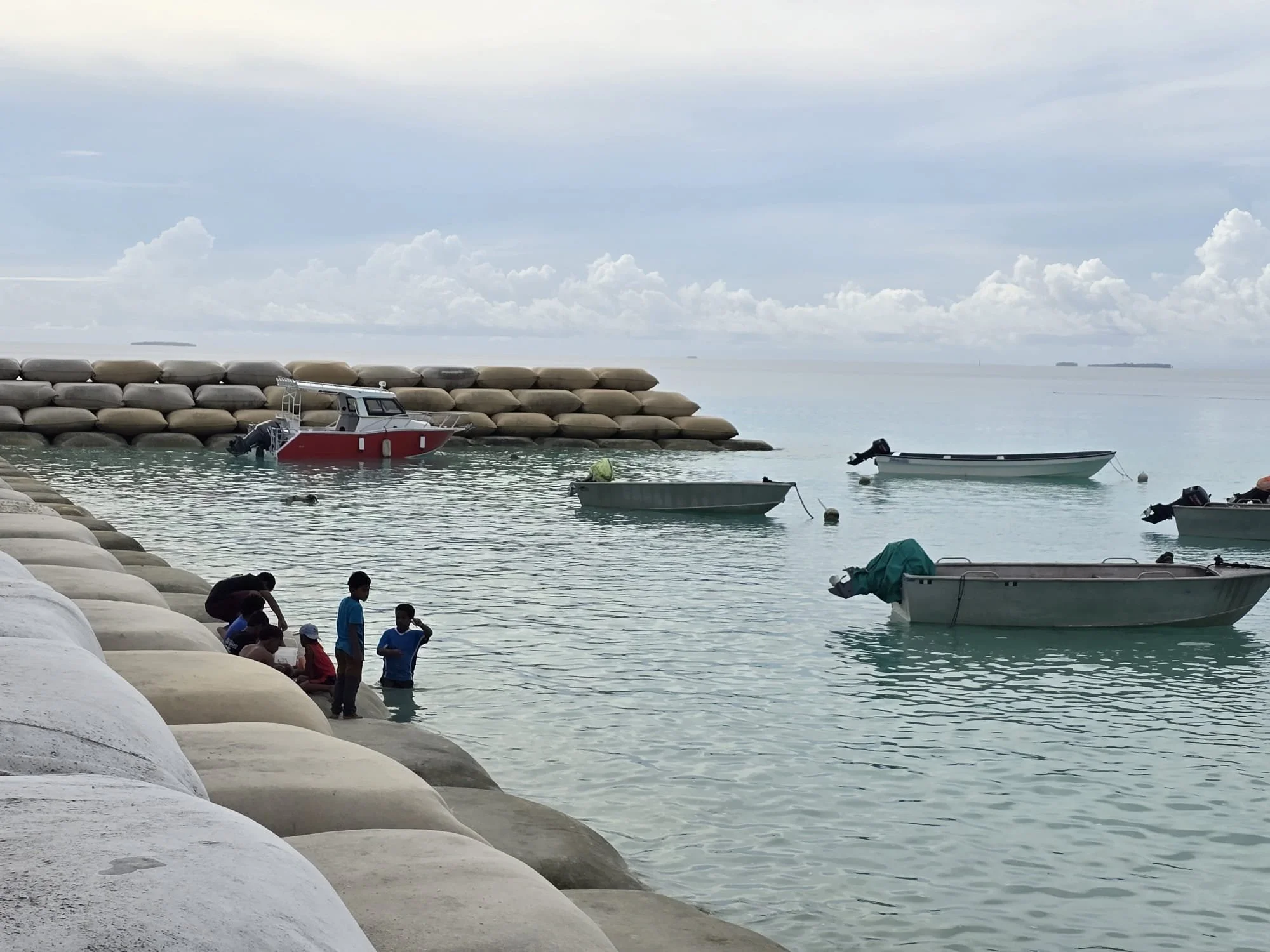
Coastal Management and Adaptation
My research in coastal management and adaptation focuses on understanding how vulnerable coastal environments can respond to hazards through the integration of coastal engineering, geomorphology, environmental assessments, and community engagement. This includes evaluating adaptation strategies while considering the physical constraints, environmental impacts, and social feasibility of long-term adaptation planning.
-
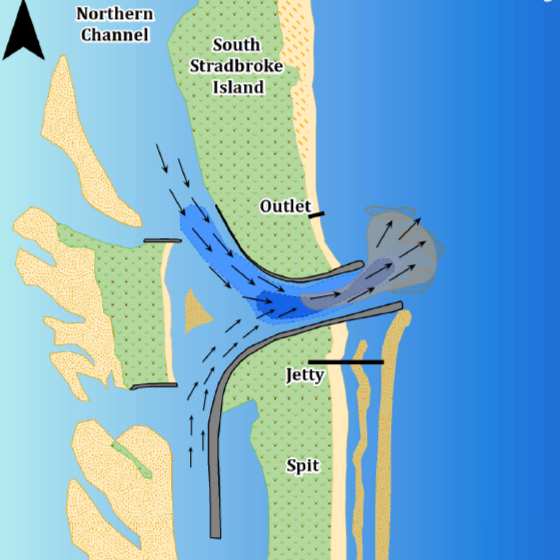
Estuarine Coastal Dynamics
My research in estuarine environments investigates the morphodynamic behaviour of sediment deposits and hydrodynamics through the integration of remote sensing, field observations, hydrodynamic analyses, and process-based modelling. The work focuses on inlet dynamics, flood and ebb delta variability, estuarine beach morphodynamics, and the role of coastal vegetation such as seagrass in modifying hydrodynamics, sediment transport, and coastal protection processes.
Publications
20+ peer-reviewed publications with research sites across tropical and temperate coastlines, and interdisplinary collaborations across oceanography, geomorphology, ecology and climate science.
Check below some key research outputs:
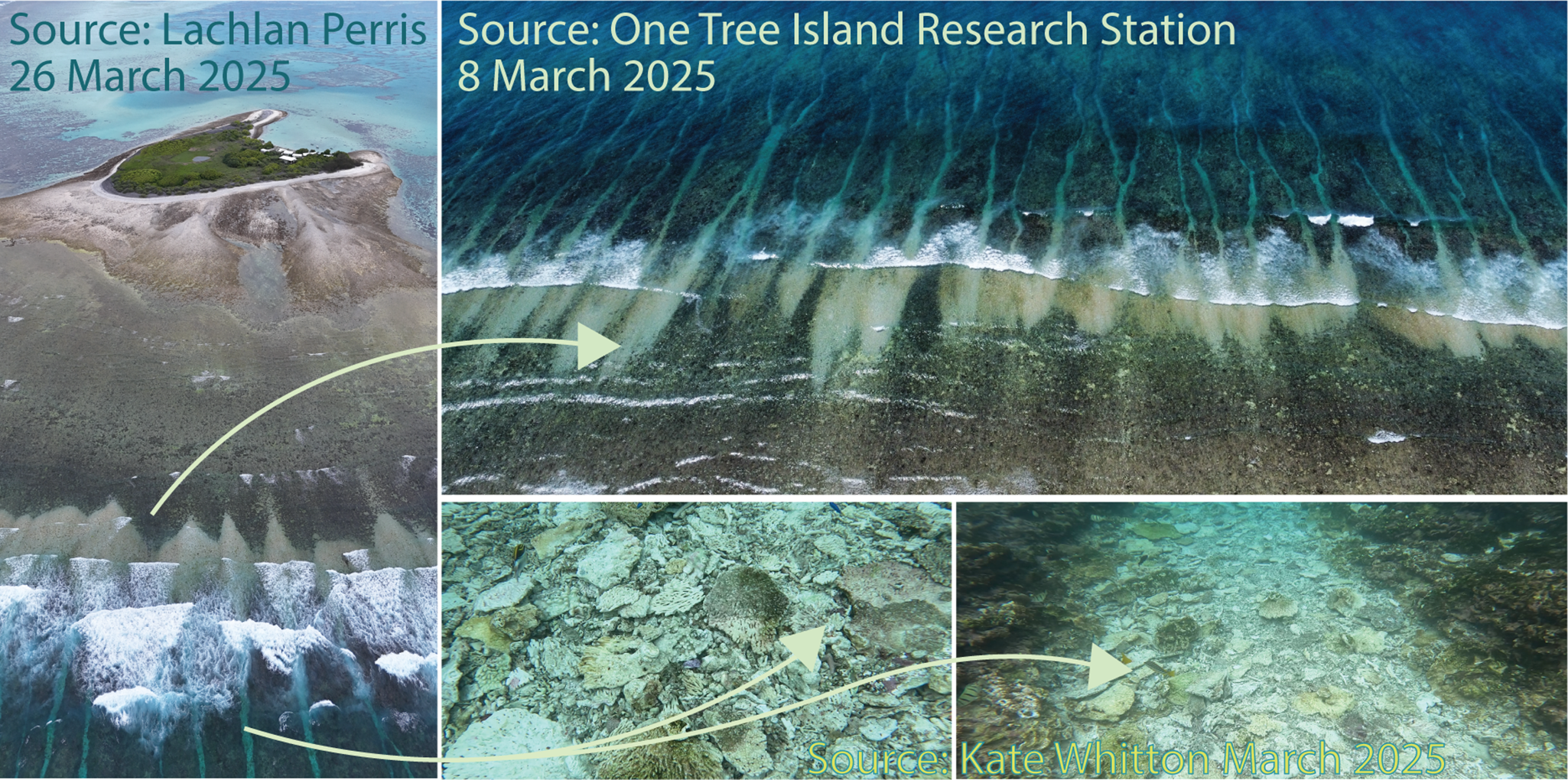
This research provided the first evidence that spurs and grooves on coral reefs can act as natural pathways for onshore coral rubble transport during high-energy events, highlighting their important role in sediment delivery and the long-term maintenance of reef islands and rubble-based ecosystems.
Vila-Concejo, A.; Perris, L.A.; Silva, A.P.; Whitton, K.; Meoded-Stern, L.; Steilberg-Liu, W.Y.; Holmes, R.; Breuer, H.; Byrne, M.; Fellowes, T.E.; Salles, T.; Morris, B.D.; Bruce, E. (2025). Grooves in forereefs act as transport channels to deliver coral rubble during tropical cyclones. Cambridge Prisms: Coastal Futures, 3, e29, 1–5 https://doi.org/10.1017/cft.2025.10019
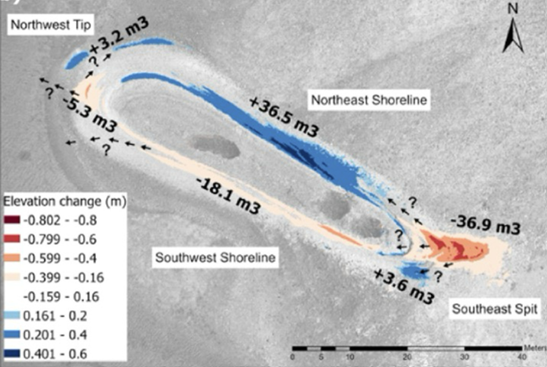
Using UAVs and high-resolution remote sensing, this research quantified how a low intensity cyclone reshaped coral rubble islands on the Southern GBR, revealing both erosion and storm-driven sediment redistribution that naturally reinforced parts of the shoreline.
Le-Quesne, C.; Fellowes, T.E.; Talavera, L.; Silva, A.P.; Perris, L.; Deo, R.; Vila-Concejo, A. (2026). Short-term morphological response of rubble coral islands to the impact of a small tropical cyclone. Geomorphology, 503, 110296. https://doi.org/10.1016/j.geomorph.2026.110296
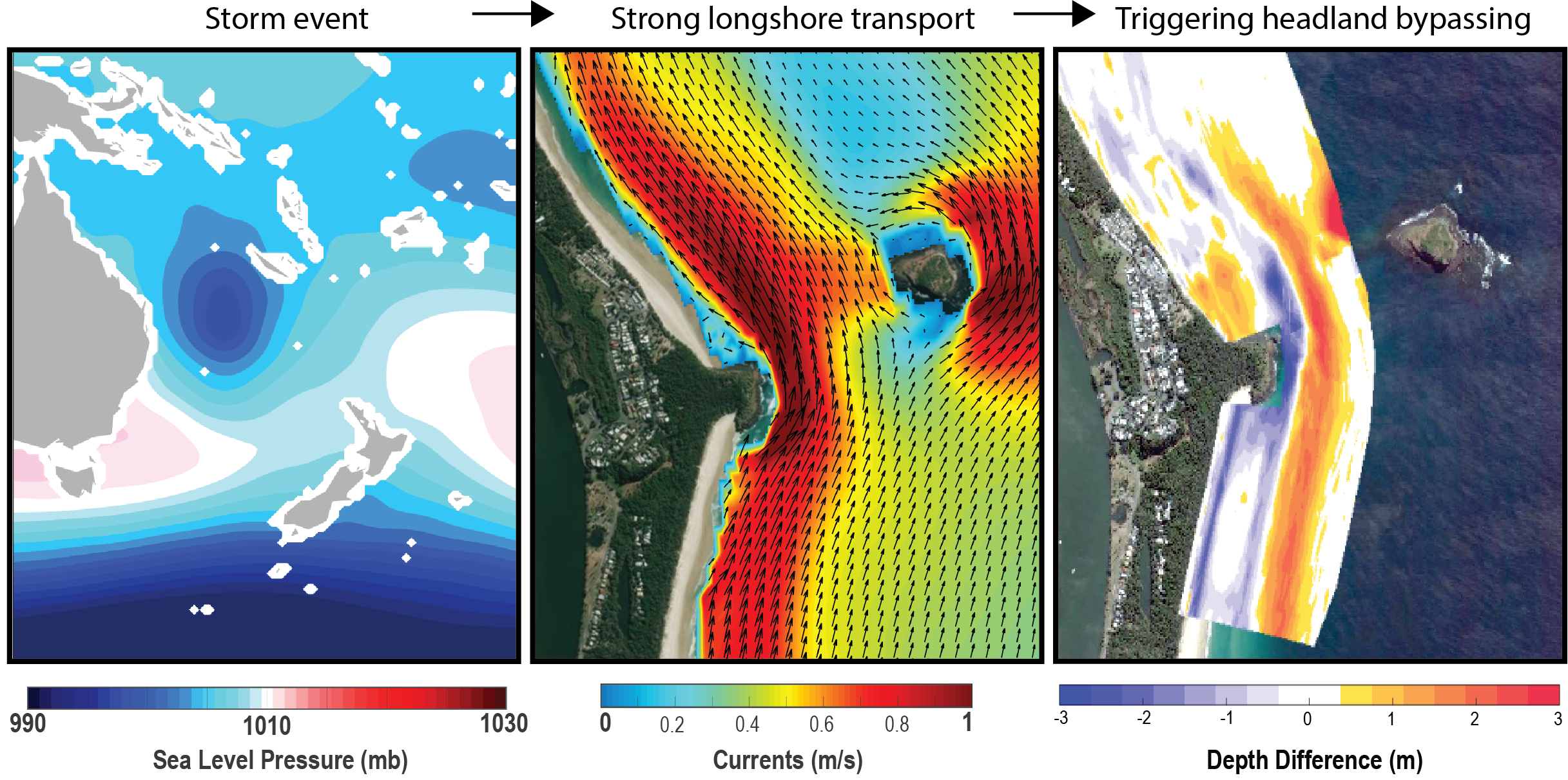
This research demonstrated how atmospheric systems such as Tropical Cyclones and East Coast Lows control the timing and mechanisms of headland bypassing along Eastern Australia, revealing how storm-driven waves regulate sediment connectivity and long-term shoreline evolution along headland-bounded coasts.
Silva, A.P.; Vieira da Silva, G.; Gomes da Silva, P.; Strauss, D., Tomlinson, R. (2025). Extreme storm events drive beach connectivity through headland bypassing. Science of the Total Environment, 971, 179076, p.1-15. https://doi.org/10.1016/j.scitotenv.2025.179076
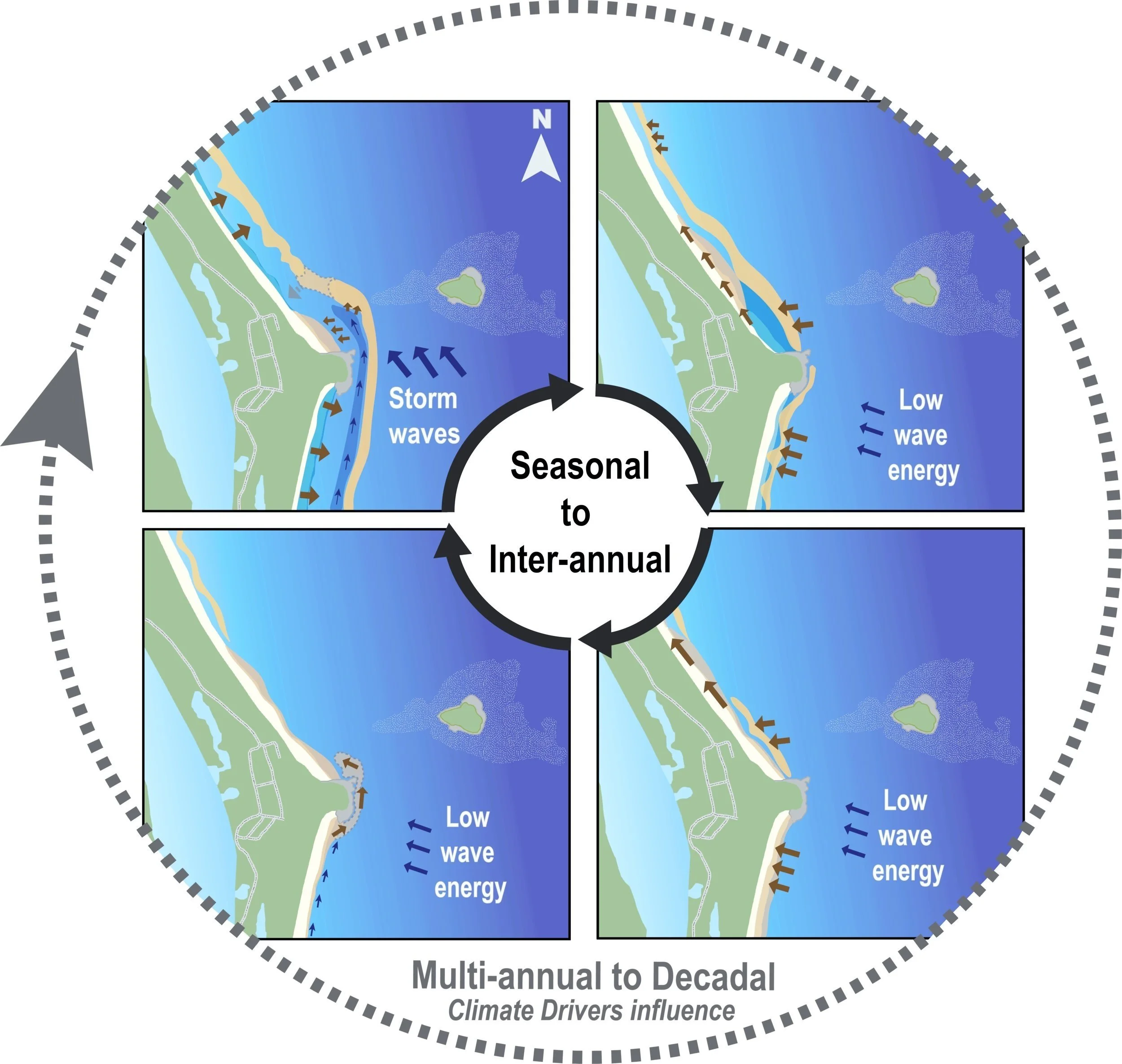
This research combined topo-bathymetric surveys and remote sensing to show that headland bypassing can occur through multiple mechanisms and timescales around the same coastline, with storm-driven sandbars and sediment leakage processes strongly controlled by sand availability and large-scale climate drivers such as ENSO and PDO.
Silva, A.P.; Vieira da Silva, G.; Strauss, D.; Murray, T.; Woortmann, L.G.; Taber, J.; Cartwright, N.; Tomlinson, R. (2021). Headland bypassing timescales: Processes and driving forces. Science of the Total Environment, 793, 148591, pp. 1-16. https://doi.org/10.1016/j.scitotenv.2021.148591

This research investigated more than five decades of shoreline and nearshore evolution at Letitia Spit, Australia, revealing how coastal engineering interventions such as training walls and artificial sand bypassing systems can trigger morphodynamic adjustments that persist for decades before a new coastal equilibrium is reached.
Silva, A.P.; Vieira da Silva, G.; Murray, T.; Strauss, D.; Tomlinson, R. (2021). Updrift morphological impacts of a coastal protection strategy. How far and for how long? Marine Geology, 441, 106625, pp.1-6. https://doi.org/10.1016/j.margeo.2021.106625

This research reconstructed 3,000 years of South Atlantic wave climate variability using preserved beach-foredune ridges, revealing that long-term shifts in predominant wave direction were strongly controlled by large-scale climate drivers such as the Southern Annular Mode and atmospheric temperature-driven teleconnections.
Silva, A.P.; Klein, A.H.F.; Fetter Filho, A.F.H.; Hein, C.J.; Mendez, F.J.; Broggio, M.; Dalinghaus, C. (2020). Climate-Induced Variability in South Atlantic Wave Direction over Past Three Millennia. Nature Scientific Reports, 10, pp.1-2, https://doi.org/10.1038/s41598-020-75265-5

Fingal Beach, New South Wales - Australia